QR-checkpoint patrol scanning, fifteen-second incident capture, license-attributed guard rosters, and cross-property compliance dashboards — built for the property manager who carries the liability when something goes wrong.
Text threads aren't legal evidence. When the slip-and-fall claim hits or the police report needs corroboration, you have no chain of custody — just a guard's word from three weeks ago and a calendar entry that says "overnight patrol."
From the guard's first scan to the insurance auditor's export, every action is captured, attributed, and defensible.
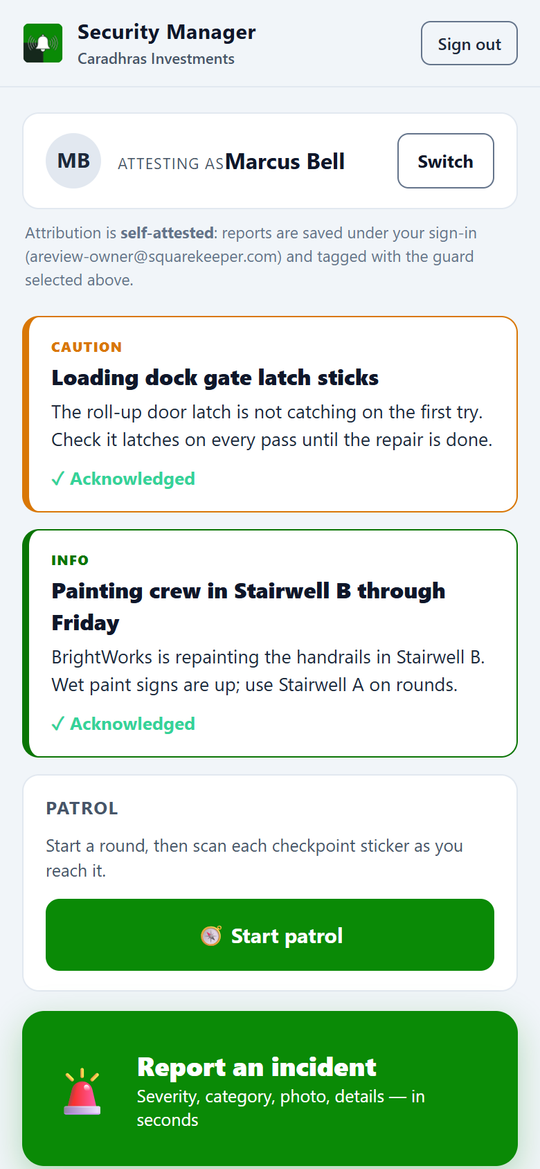
Category, severity, photo, location, description — submitted from any device by any guard, time-stamped at capture with location and guard attribution baked in.
Place QR checkpoints around the property; guards scan as they pass. Coverage rolls up in real time, and missed checkpoints flag automatically. Patrol becomes verifiable.
Every guard on duty named, attributed, and license-tracked, with expiration alerts before a license lapses. Auditors see exactly who patrolled, when, and whether they were licensed.
Active incidents pinned to the property map in real time, severity-coded. Drill into any one for photos and full context.
Per shift, per night, per guard, with trend lines and flagged misses. Insurance-grade documentation, not narrative.
Time of day, category, severity, recurrence — inform staffing decisions with actual data, not anecdote.
CSV and PDF — insurance audits, police reports, court evidence packages — exportable in one click, with the chain of custody intact.
Track which staff have access to which camera feeds. It doesn't replace your camera vendor — it coordinates, so when an incident hits you know which camera saw what.
Multi-property operators see every incident in one view, filterable by severity, type, and property. Compare safety profiles across the portfolio.
Quick capture, offline-tolerant, bilingual — it meets guards where they actually work.
High-contrast, big targets, anti-glare type. Day or night.
Spanish-speaking guards capture incidents and patrol in their language.
Capture incidents without signal; sync when you're back in range.
Every incident expects photos — documentation builds itself.
Security doesn't end at the incident report — the aftermath flows into maintenance, parking, operations, and staff records automatically.
Vandalism, a broken window, graffiti — the incident report auto-spawns a maintenance work order with the photo and incident reference attached. The repair lives next to its cause.
A suspicious vehicle, a hit-and-run, an abandoned car — Security Manager cross-references the plate against the parking registry. Tenant, vendor, or repeat? You know in seconds.
Anything severity-critical lands in Operations Manager and the weekly digest. Trends become visible — patterns get attention before they become insurance claims.
Guard scans link back to their shift record, and license expirations alert in both modules. Insurance audits get a unified chain of custody.
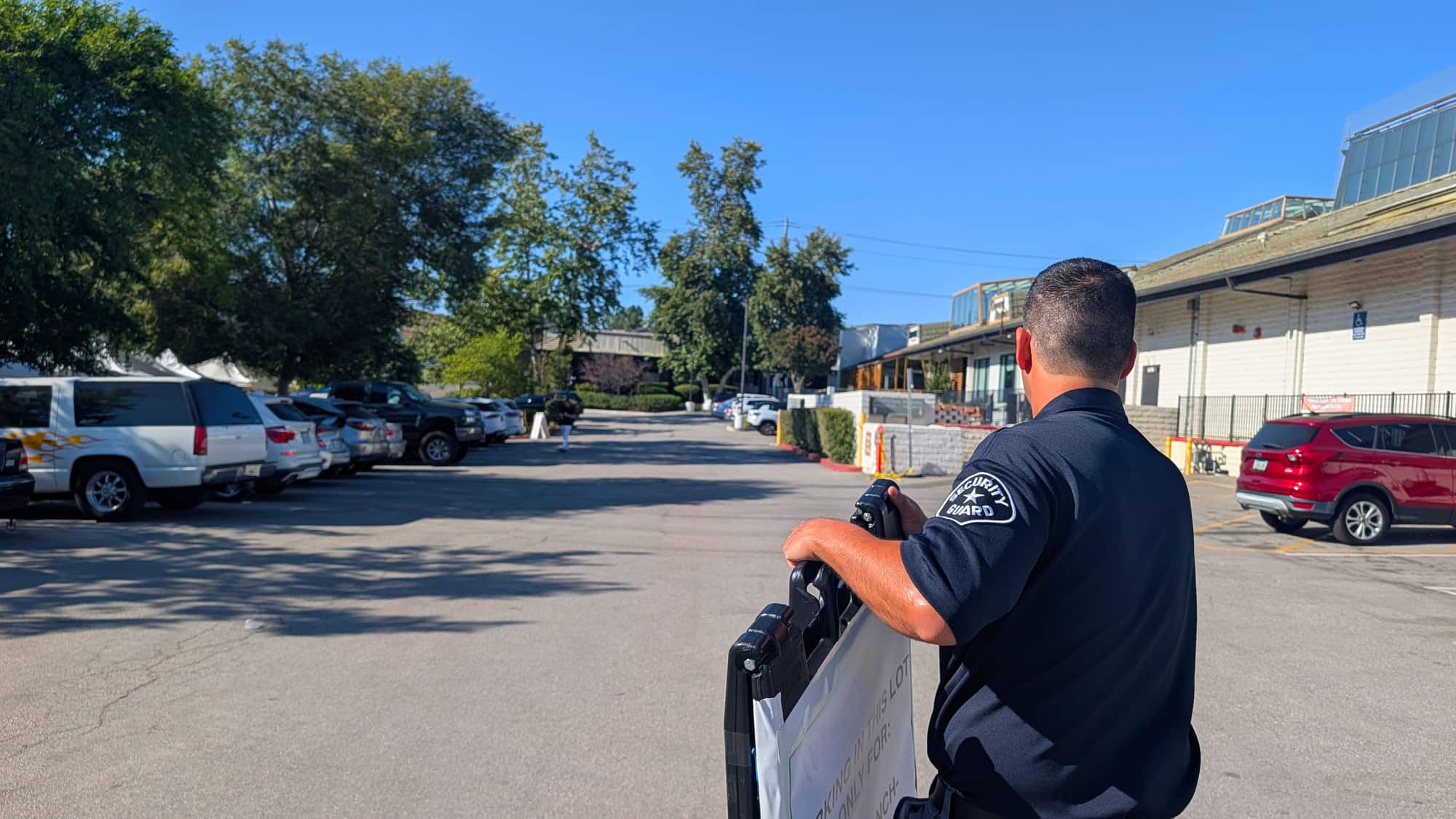
No. It works for properties with in-house staff doing rounds, contracted guard services, or hybrid setups. The QR-checkpoint approach turns any staff member doing rounds into a documented patrol — you don't need a uniform.
No — it's the documentation layer for whatever security model you run. Many properties contract third-party guards; Security Manager gives those guards a place to log patrols and capture incidents, and the firm benefits because the documentation is no longer their burden.
The field app is bilingual EN/ES — guards pick their language at first run, and incident categories, severity prompts, and patrol instructions all render in Spanish.
Yes — it supports a shared-firm credential pattern: the firm has one login per property, and the on-duty guard self-attests at the start of each shift via a roster picker. No per-guard onboarding required.
It doesn't replace your cameras — it coordinates with them. Track which staff have access to which feeds; when an incident is reported, quickly identify which cameras cover that location and who can review the footage. The cameras stay with your existing vendor.
Every record is time-stamped, photo-tagged, guard-attributed, and immutable, and the audit log captures every edit. Compliance exports generate CSV and PDF packages for insurance claims, police reports, and litigation discovery. Final defensibility always depends on your legal team — but the chain of custody is built in.
No — Security Manager is not an emergency-dispatch system. For active emergencies your team uses 911. Security Manager captures the documentation around the incident — before, during, after — so the report to law enforcement and insurance is already complete.
Start a free 30-day trial — no credit card. Drop your existing incident archive in by CSV in minutes.